Some international agreements become important not only because of their political consequences but also because they raise questions about religion, history, identity, and the relationship between different communities. The Abraham Accords are one such development. Announced in 2020, the accords established or advanced diplomatic normalization between Israel and several Arab or Muslim-majority states, beginning with the United Arab Emirates and Bahrain and later involving Morocco and Sudan. The agreements also encouraged cooperation in areas such as trade, investment, tourism, and other sectors.
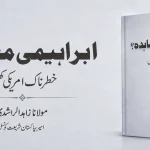
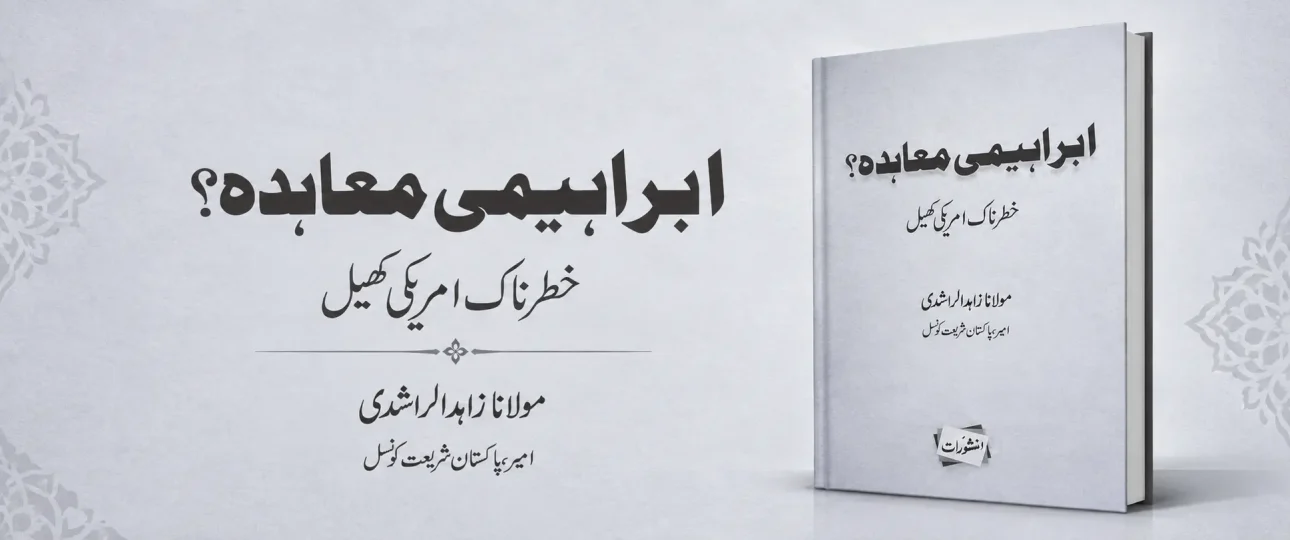
For Muslim readers interested in understanding the subject from an Islamic viewpoint, Ibrahimi Muahida offers a different starting point. The Urdu book, published by Manshurat, is associated with Maulana Zahid al-Rashdi, who has written extensively about contemporary religious, political, and social issues. His writings on the subject discuss the Abraham Accords through questions of Islamic belief, Tawhid, religious identity, and the historical meaning of the term “Ibrahimi.”
What Is Ibrahimi Muahida?
Ibrahimi Muahida translates roughly as “Abrahamic Agreement” or “Abraham Accords.” In the context of this book, however, the term carries more than a diplomatic meaning. The book examines the concept from an Islamic and theological perspective and asks readers to consider how the language of “Abrahamic” identity relates to Islamic beliefs.
The actual Abraham Accords refer to a series of diplomatic agreements connected with the normalization of relations between Israel and several countries. On September 15, 2020, Israel, the United Arab Emirates, and Bahrain were represented at the White House ceremony associated with the accords. The U.S. State Department describes the agreements as establishing diplomatic relations and promoting cooperation between the participating countries.
Ibrahimi Muahida, however, does not approach the subject simply as a diplomatic history. It focuses on the religious questions that the author believes deserve attention. This makes the book particularly relevant to readers who want to explore how an Islamic scholar interprets the religious dimension of a contemporary international development.
What Are the Abraham Accords?
Before examining the book, it helps to understand the basic meaning of the Abraham Accords.
In 2020, Israel and the United Arab Emirates agreed to normalize relations, while Bahrain announced a similar agreement. The agreements were formally signed at the White House in September 2020. Morocco subsequently established diplomatic relations with Israel in connection with the broader Abraham Accords framework, while Sudan also moved toward normalization.
The agreements cover more than diplomatic recognition. They have been associated with cooperation involving commerce, investment, tourism, technology, security, and other areas. The U.S. government presented the accords as part of a broader effort to increase regional cooperation and diplomatic relations.
At the same time, the accords have generated debate about their implications for the Middle East, Palestinians, regional diplomacy, and relations between Israel and Arab or Muslim-majority states. Different governments, scholars, political groups, and commentators have interpreted their significance differently.
That wider debate provides the background for Ibrahimi Muahida Urdu, which approaches the issue from the author’s Islamic perspective.
Who Is Maulana Zahid al-Rashdi?
Maulana Zahid al-Rashdi, also known as Abu Ammar Zahid al-Rashdi, is a Pakistani religious scholar and writer whose published work addresses Islamic thought, contemporary affairs, politics, history, and religious questions.
His own website contains writings on subjects ranging from Islamic teachings and interfaith questions to Palestine, international affairs, constitutional issues, and contemporary political developments.
His writings about the Abraham Accords show that he views the issue through an Islamic theological framework. In a 2025 article titled “Abraham Accords: A New Net by Old Hunters,” he discusses the concept in relation to religious identity, Tawhid, and historical examples.
Another 2025 article, “The Broader Context of the Abraham Accords,” examines the subject through historical and religious arguments and discusses the author’s understanding of how the term “Abrahamic” is being used in contemporary discourse.
These writings provide useful context for understanding the intellectual background of Ibrahimi Muahida.
What Does Ibrahimi Muahida Discuss?
The central focus of Ibrahimi Muahida is the relationship between the contemporary Abraham Accords and Islamic concepts of religious identity.
The book’s approach can be understood through several themes.
Tawhid and Islamic Belief
One important theme in Maulana Zahid al-Rashdi’s writings on the subject is Tawhid, the Islamic doctrine of the oneness of Allah.
The author uses Tawhid as a foundation for discussing what he considers the theological implications of attempts to place different religious traditions under a shared “Abrahamic” framework. His argument is theological rather than merely diplomatic, so readers encounter questions about Islamic creed alongside discussion of international affairs.
The Meaning of “Abrahamic”
The word “Abrahamic” has become common in modern discussions about Judaism, Christianity, and Islam because the three traditions all have important connections to Abraham.
The Abraham Accords themselves use this terminology in a diplomatic context. The U.S. State Department’s historical material explains that the name refers to Abraham’s significance across the three faith traditions.
Maulana Zahid al-Rashdi’s writings ask a different question: how should Muslims understand this terminology in light of Islamic theology?
That distinction is important. The book does not simply explain what the diplomatic agreements contain. It examines the religious meaning that the author associates with the terminology.
Ibrahimi Muahida and Islamic History
Another feature of the author’s discussion is the use of Islamic history.
In his writing on the subject, Maulana Zahid al-Rashdi refers to historical examples to explain his concerns about attempts to combine or harmonize religious ideas. He discusses earlier episodes in Muslim history and connects them with his interpretation of contemporary debates.
For readers, this historical approach provides additional context. Instead of looking at the Abraham Accords as an isolated event from 2020, the book encourages readers to consider how questions of religious identity, interfaith relations, and political arrangements have appeared throughout history.
How Does the Book Approach the Abraham Accords?
It is important to distinguish between the documented nature of the Abraham Accords and the interpretation presented in Ibrahimi Muahida.
Historically, the accords are diplomatic agreements designed to normalize or improve relations between Israel and participating countries. Official U.S. records document the 2020 agreements with the UAE and Bahrain and later normalization involving Morocco and Sudan.
Maulana Zahid al-Rashdi approaches these developments from an Islamic scholarly perspective. His writings question the religious implications of the terminology surrounding the accords and examine what he sees as the difference between political cooperation and religious belief.
This distinction makes the book useful for readers who want to understand one documented scholarly perspective, rather than assuming that the author’s theological interpretation represents the only interpretation of the Abraham Accords.
Why Read Ibrahimi Muahida in Urdu?
For readers comfortable with Urdu, the original language provides direct access to the author’s terminology and argument.
Ibrahimi Muahida Urdu is particularly relevant for readers who prefer to explore contemporary Islamic issues through Urdu scholarship. The language allows the author to discuss religious concepts, historical references, and theological arguments in a vocabulary familiar to many South Asian Muslim readers.
The book can also serve readers who already know about the Abraham Accords from international news but want to understand how a Pakistani Islamic scholar approaches the subject.
Rather than relying only on short news reports, readers can examine the subject through a more extended religious discussion.
Who Should Read Ibrahimi Muahida?
Ibrahimi Muahida book may interest several types of readers.
First, students of contemporary Islamic thought can use it to examine how Muslim scholars respond to major international developments.
Second, readers interested in the Abraham Accords in Urdu may find the book useful because it approaches the subject through Islamic terminology and historical references.
Third, readers studying interfaith relations may find the discussion valuable for understanding how concepts such as “Abrahamic faiths” are received within an Islamic theological framework.
Finally, readers interested in Maulana Zahid al-Rashdi’s wider body of work can use the book alongside his other writings to understand his approach to contemporary affairs.
Why This Book Matters for Understanding Contemporary Islamic Discourse
International agreements often appear in the news through diplomatic statements, economic statistics, and political analysis. Religious readers, however, may also ask how such developments relate to faith, identity, and Islamic teachings.
This is where Ibrahimi Muahida adds another layer to the discussion.
The book does not replace diplomatic or historical sources about the Abraham Accords. Instead, it represents a particular Islamic scholarly response to those developments.
For a well-rounded understanding, readers can compare three types of material: official documents explaining the accords, historical and political analysis of the agreements, and religious scholarship discussing their theological implications. This approach helps readers separate established facts from interpretation and form their own understanding of a complex subject.
Frequently Asked Questions
What is Ibrahimi Muahida?
Ibrahimi Muahida is an Urdu Islamic booklet associated with Maulana Zahid al-Rashdi. It discusses the Abraham Accords and examines their religious implications from the author’s Islamic perspective.
Who wrote Ibrahimi Muahida?
The book is by Maulana Zahid al-Rashdi, a Pakistani religious scholar and writer whose work covers Islamic thought and contemporary affairs. His published writings also include discussions specifically addressing the Abraham Accords.
What are the Abraham Accords?
The Abraham Accords refer to agreements beginning in 2020 that established or advanced diplomatic normalization between Israel and several Arab or Muslim-majority countries. The UAE and Bahrain were among the first participants, followed by normalization involving Morocco and Sudan.
Is Ibrahimi Muahida available in Urdu?
Yes. Ibrahimi Muahida Urdu is the original language context of the book listed by Manshurat. The Manshurat website currently lists the title among its Islamic book offerings.
Conclusion
The Abraham Accords represent an important development in modern Middle Eastern diplomacy, but their meaning extends beyond diplomatic documents for many readers. They also raise questions about religion, identity, interfaith relations, and the use of Abrahamic terminology.
Ibrahimi Muahida by Maulana Zahid al-Rashdi approaches these questions from an Islamic scholarly perspective. The book gives readers an opportunity to examine the author’s arguments concerning Tawhid, religious identity, history, and the contemporary Abraham Accords.
For readers searching for Ibrahimi Muahida book, Ibrahimi Muahida Urdu, or Abraham Accords in Urdu, the book provides a focused way to explore a Pakistani Islamic scholar’s response to a major contemporary issue. Readers who want a broader understanding should also consult official diplomatic records and independent historical analysis alongside the book.
Ultimately, Ibrahimi Muahida is best understood as a work of Islamic commentary on contemporary international development. Reading it alongside primary sources and other perspectives can help readers distinguish historical facts from theological interpretation and engage with the subject in a more informed way.